
Every survivor deserves
a door that opens.
People with disabilities and Deaf survivors experience violence at disproportionately high rates, yet too often encounter systems that were never designed with them in mind. We work alongside communities across the country to ensure disability is never a barrier to safety, healing, or justice.
THE CHALLENGE
Millions of people with disabilities and Deaf people experience domestic violence, sexual assault, trafficking, and other forms of violence. Yet the systems designed to help too often remain inaccessible, fragmented, or unprepared to meet their needs.
For decades, disability has been treated as an afterthought in survivor advocacy. The result is missed opportunities for safety, justice, and healing—and one of the most overlooked equity gaps in the movement to end violence.
The problem isn’t survivors. It’s the systems they’re asked to navigate.
OUR VISION
We envision a future where disability is never a barrier to safety and healing.
→Where every domestic violence
shelter, rape crisis center, child
advocacy center, and anti-trafficking
organization welcomes survivors with
disabilities.
→Where disability organizations
recognize abuse and know how to
respond.
→Where communities work together so
survivors encounter coordinated,
accessible support rather than
disconnected systems.
→Where every survivor—regardless of
disability, language, and culture—can
enter any door and find help.
Because every survivor deserves a door that opens.
Our Approach to Systems Change
No single strategy is enough. These five approaches work together to create lasting, systemic change.
Changing systems begins by changing what—and who—we see.
We elevate disability within conversations about survivor advocacy through leadership, storytelling, research, and national partnerships.
When disability becomes part of the conversation, it becomes part of the solution.
CHANGE THE CONVERSATION
Organizations need more than good intentions-they need the knowledge, tools, and confidence to service survivors with disabilities and Deaf survivors.
We partner with domestic violence programs, rape crisis centers, anti-trafficking organizations, Tribal organizations, culturally specific organizations, and other community-based organizations to build capacity needed to effectively serve survivors with disabilities and Deaf survivors..
Accessibility becomes part of how organizations work - not an extra step.
STRENGTHEN
ORGANIZATIONS
No organization can meet every survivor’s needs alone.
We bring disability organizations, victim service providers, healthcare systems, law enforcement, courts, and community leaders together to build coordinated responses so survivors experience one coordinated network of support—not a maze of disconnected services.
BUILD
PARTNERSHIPS
Accessibility should never depend on an organization’s budget.
Sometimes that means funding an interpreter.
Sometimes it means redesigning intake forms.
Sometimes it means helping an organization understand how to support a survivor with an intellectual disability.
Whatever the barrier, our goal is simple:
Remove it.
REMOVE
BARRIERS
We identify needs that existing systems aren’t meeting—and build practical solutions while broader change takes shape.
Sometimes that means launching a new initiative.
Sometimes it means creating tools that don’t yet exist.
Sometimes it means delivering services no one else can provide.
We build what people need today while working toward systems that won’t need it tomorrow.
FILL
CRITICAL GAPS
OUR IMPACT
Systems Change in Action
We don’t just imagine more accessible and effective systems-we build them. Our initiatives demonstrate how changing policy, practice, and partnerships lead to safer communities for survivors with disabilities and Deaf survivors.
ACCESSING SAFETY INITIATIVE
FEATURED INITIATIVE
Building coordinated, community responses where disability, language, and culture are never a barrier to safety and healing.
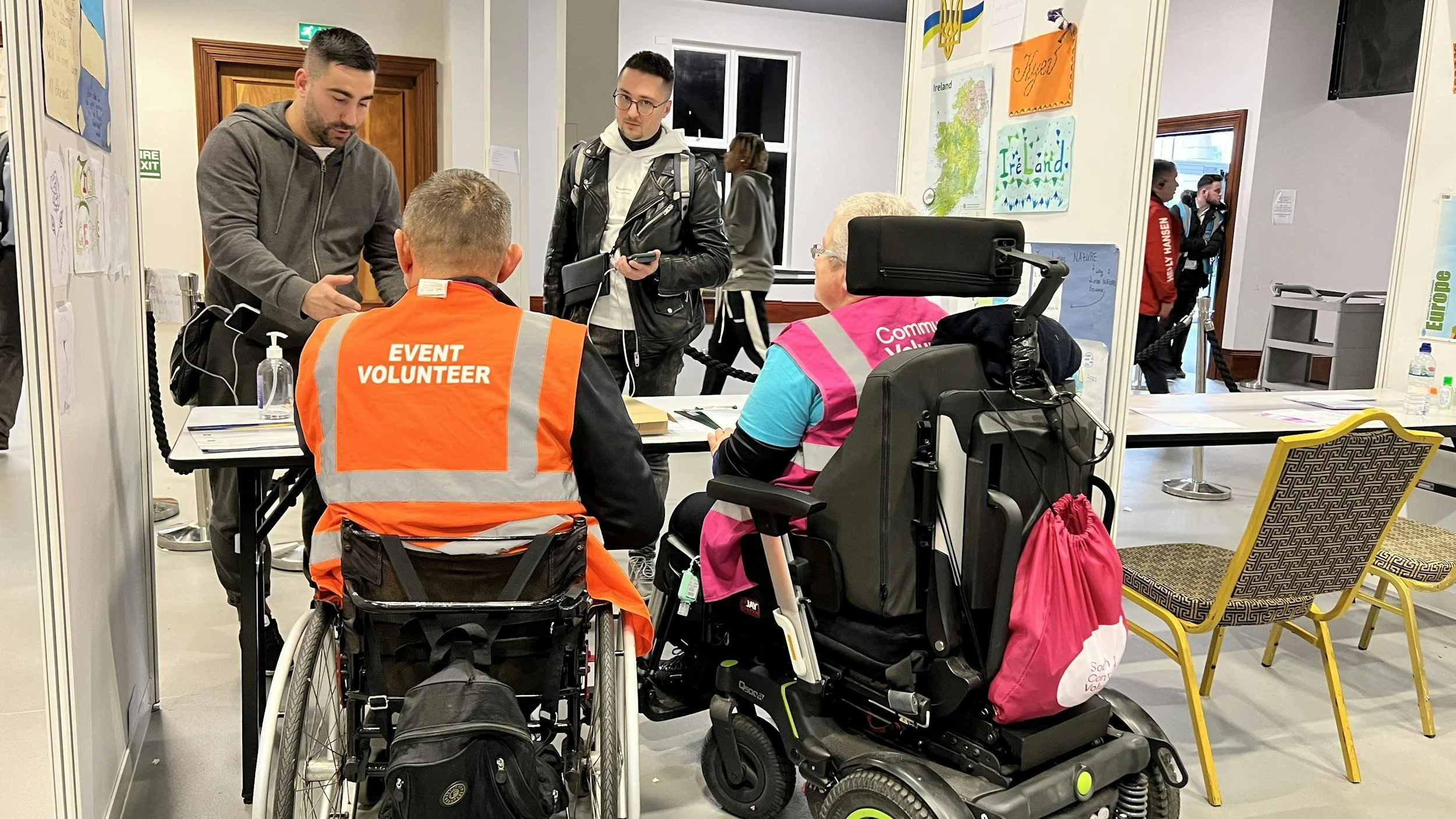
We have built a national network of community-based collaborations working to improve services for survivors with disabilities and Deaf survivors.
Through intensive coaching, training, and implementation support, we help victim service organizations, disability organizations, law enforcement, healthcare providers, courts, and other partners build coordinated, accessible, and effective systems that work for everyone.
We don’t stop with individual communities. We capture what works, translate those lessons into practical tools, training, research, and national guidance, and share them broadly so communities across the country can build on proven approaches.
2025 IMPACT
19
Communities
receiving intensive support
Professionals trained
to strengthen their ability to serve survivors with disabilities and Deaf survivors
3,404
Consultations
helping organizations remove barriers, improve accessibility, and become trauma-informed
573
Organizations
more accessible
more trauma-informed
more equipped
46
Strengthen your organization. Transform your community.
We partner with organizations, multidisciplinary teams, and community leaders to improve accessibility, strengthen responses for survivors with disabilities and Deaf survivors, and build systems that work for everyone.